
My Brother's Killer, Rachel Mason, SXSW 2026
Rachel Mason’s gripping true crime doc My Brother’s Killer is, first and foremost, a love letter.
My Brother’s Killer emerged, in part, from Rachel Mason’s previous documentary Circus of Books, named after her parents’ West Hollywood gay porn bookstore, where she grew up enamored by the men who frequented it. Her latest film is also an ode to West Hollywood’s famed yet notorious stretch of Santa Monica Boulevard of the 1990s. Moreover, it is a love letter to a VHS era; a magazine era; a video awards era (ushered in by the likes of Chi Chi LaRue); a cyberpunk era that pioneering filmmakers like Bruce LaBruce dabbled in; and a very white gay male era, albeit awash in the HIV crisis that was gripping the world.
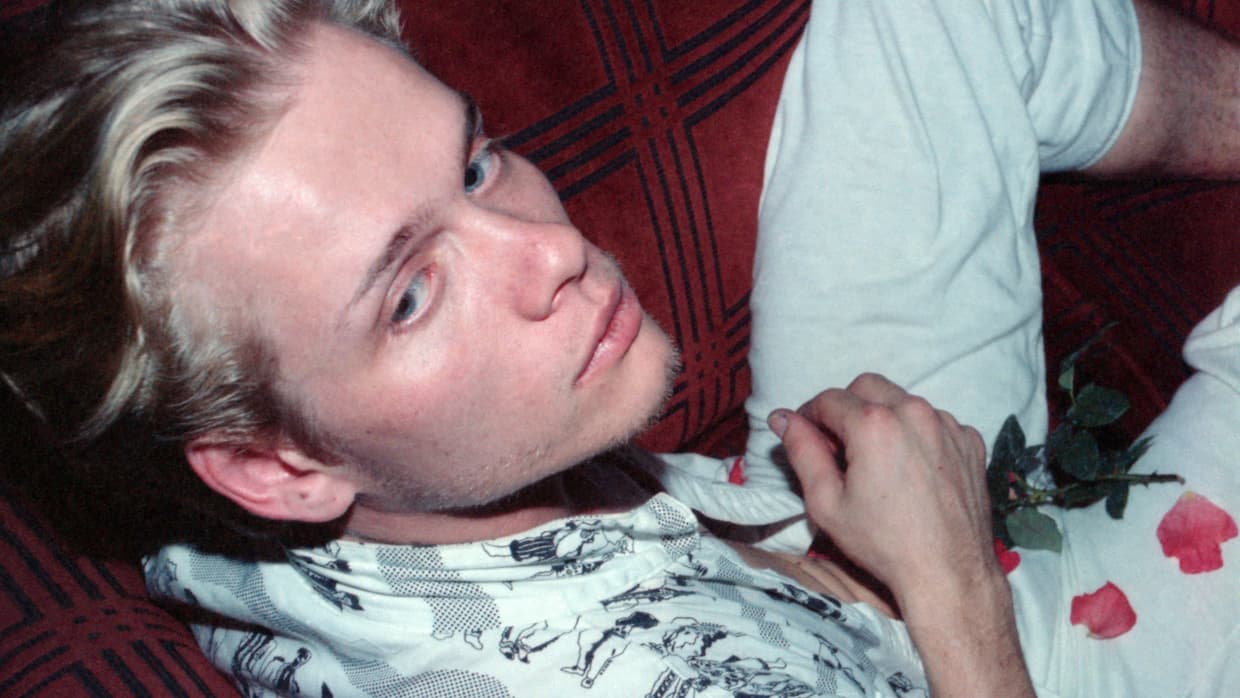
Most blisteringly, it’s an unexpectedly personal love letter to 25-year-old porn actor and aspiring director Billy London, born William Newton in rural Wisconsin, who was murdered on October 28, 1990. His head and feet were discovered by a transient in a WeHo dumpster, a mystery that would temporarily grip national media that was otherwise obsessed with stigmatizing AIDS. Despite repeated attempts to revive it, the case would grow cold. That is until a series of unexpected factors—captured jaw-droppingly and fortuitously in Mason’s documentary—led to its solving more than three decades later.
The cast of good samaritans includes old boyfriends and roommates, true crime podcast hosts, a curious LAPD detective, and a stubborn empty nester in Eau Claire, Wisconsin, born in the same year and place that Newton was. Mason and her editor Dion Labriola’s filmmaking and forensic instincts reveal a boulevard of brutality that resounds bitterly in our contemporary moment. Interspersed throughout is myth-making imagery of the man we now only remember as Billy London, a queer human hunting for love and acceptance by way of meth and misguidance, who arrived as a teen in West Hollywood hitching truck rides in the decade before the slur “queer” was reclaimed by pride movements.
Naturally, spoilers abound in this conversation with Mason, who I spoke to via Zoom a couple days before My Brother’s Killer would premiere at SXSW 2026.
Filmmaker: Maybe this is obvious and I missed it, but why is the film called My Brother’s Killer?
Mason: Actually, that’s not an obvious question. I have always felt that great titles really just fall out of the sky. We had a title that I had fallen in love with, which was “Small Town Boys.” My editor and I landed on it, but it really was his idea. There’s this famous song called “Small Town Boys,” and we have it in our intro. I always felt like that’s what this film, on some level, was about. Billy London came from a small town in middle America to West Hollywood, which is another small town filled with, you know, small town boys.
One day I was in touch with one of Bill Newton’s (Billy London) sisters. She just casually wrote to ask me, “Have you been talking to my brother’s killer?” I got a shock [and said to myself], “God, that is such a haunting expression.” It’s been really strange to be the person that got to understand what that means. To get more philosophical, who really killed Billy? Yes, it was this one individual, but you can also look at our society. There’s a larger factor at work that led to Billy’s death, and which is continuing to be the killer of queer people today. AIDS was also often described as a killer. I just felt like it was a poignant title because of that.
Filmmaker: You’ve made at least a couple of feature documentaries—Circus of Books and Last Take: Rust and the Story of Halyna—that are personal and/or investigative. How is My Brother’s Killer different?
Mason: I really do find that there’s an accidental personal thing that happens. It’s not that I’m trying to foist myself into these stories, but almost like the stories find me and I end up deeply involved.
I realized that Circus of Books would lead to me probing my own family and my brother. It was very uncomfortable and sad when I realized that my brother had still, until I did the documentary, not really processed some of the trauma of coming out. In a strange way, I didn’t understand it until I made my own film. Like, “Gosh, I cannot believe in my family, of all families, there would be homophobic religious bigotry.” My mom was very religious and grew up thinking it’s a sin to be a homosexual. I thought, “Well, mom, you ran a gay porn store. You’re a hypocrite.” And my mom, to her credit, is always willing to accept her flaws and course-correct. So in this film, it really made sense to bring her back, because her trauma of hearing about the [murder] was very real. She remembered it. They had put up signs at the store for Billy when he was murdered.
When I was growing up, I got to know these guys because they were floating around the store. I’m a total fag hag, I just wanted to be around all these guys in the store. Billy could have easily been any of them. When I was doing Circus of Books, the AIDS crisis felt so real to me, but I was a child at the time. I didn’t fully process it until I was older. My mom would be very blunt about it. I would say, “What happened to this person? He was around a couple months ago.” My mom would be like, “Well, he died.” Then I asked, “What about this person? Or that person?” It was sad, but in a way, this is what everyone who went through the AIDS crisis had to deal with. When death is overwhelming, you can’t fully process it.
That’s why Billy’s murder felt so personal to me. How on earth does a gay man get murdered when everyone is getting killed [by AIDS]? I really couldn’t let it go. Also, going back to the title, My Brother’s Killer, I kept thinking of Billy like a brother because I got to know his sisters and they’re such wonderful people. I just felt so much sadness for what they experienced. As a sister to a gay brother, [I felt like] Billy could have been my own brother.
To answer your question about Halyna, I will tell you straight up it was the hardest thing I’ve ever done because the victim was my good friend. The very first interview I did for this film was the one with Billy’s lover, Marc Rabins. The day I sat down to interview him was right after Halyna had died. Marc graciously said, “Are you sure you want to do this?” I honestly felt like I heard Halyna’s voice in my head telling me, “You have to.”
In a strange way, I don’t think you should make a film about murder unless you have some sense of what it feels like to experience that. I finally recognized that. It was an awful thing to feel but it gave me a sensitivity I never had before. To this day, I wish I didn’t have to make the film. I would have traded it for her. She deserves to be alive. But that’s the feeling you have when someone that you love is killed.
Filmmaker: In this film, the AIDS crisis doesn’t get mentioned until later, when subjects speaking in the 2020s are talking about the 1990s. I feel like this is often how we consider things. We contextualize in hindsight, and in doing so, we put a patina over the past.
Mason: When you say “a patina on the past,” do you mean like a warm, fuzzy, shiny patina that’s not as deep?
Filmmaker: It also could just be thinking in easy statements like, “People were homophobic back then because there was the AIDS crisis.” Things are probably more nuanced than that, right?
Mason: Totally. I think one of my favorite aspects of what we were able to do in this film is deepen the historical record and allow it to be more of a marker for what we’re living through today—specifically the white nationalism, which was a deep-rooted part of the murder. Billy’s murder being a hate crime was so tied in with the white-nationalist skinhead movement that his killer was involved in. It was actively calling for the murder of gay people. The weekend that Billy was killed was right after there was a large announcement by the leader of the Nazi party, who was like, “We need to start actively seeking out ways to murder people who are gay and not white.” That of course includes brown people, Jewish people, anyone that is not Aryan. It’s chilling to see that movement come back [today] and it’s not even underground right now. We have members of our political establishment that have direct ties to these movements and it’s terrifying.
That being said, one of the things I want to be clear is that because the gay community was so oppressed, there was also this great resilience [happening] in that culture. You know, Chi Chi LaRue out on stage, is so defiant. There was a type of gay reaction that I don’t think we’ve heard a lot about, and that was the Queer Nation movement. In fact, the buttons that we made for our film are the Queer Nation poster, which says, “Hey, Bigots! An attack on one of us is an attack on all of us.” Just that poster alone could apply to the present day. There was militant activism, but it was also vibrant. In the face of horror, I could see people partying their asses off. The gay community has always been celebratory and it’s this great defiance that underscores the constant brutality.
Deepening that historical record is so important. Now we say LGBTQIA+, but at that time there were these different gay subcultures. Some people were punk rockers and some were preppy [laughs]. There were fascinating worlds within worlds, without any social media or Facebook groups to identify people.
Filmmaker: I love Billy’s poem that bookends the film: “This piece here. That piece there.” In addition to the words being lovely in themselves, it’s a great way of signaling that you are assembling clues to a mystery. Could you talk about how you worked with your editor in assembling all this material? At what point did you know you were going to make the film about solving Billy’s murder?
Mason: I can safely tell you that there would be no film without Dion Labriola, our editor. I can’t even conceive of this film in any way without his nuance. He
Source: filmmakermagazine.com