
On May 1, the American Academy of Motion Picture Arts and Sciences released the rules for the 99th Oscars. As captured in the related Akoroko report, the largest changes are to the International Feature Film category — historically the only realistic route into the Oscars for African films.
Until now, only one path existed: a country's national selection committee submitted one film per year to the Academy, and any film not picked by its country was ineligible.
Under the new rules, starting with the 99th Oscars next year, a non-English-language film can also qualify by winning a designated prize at one of six festivals: the Golden Bear at the Berlin International Film Festival, the Best Film Award at the Busan International Film Festival, the Palme d'Or at Cannes, the World Cinema Grand Jury Prize at Sundance, the Platform Award at the Toronto International Film Festival, or the Golden Lion at Venice.
Following the announcement, I conducted research to assess how realistic this major festival award pathway has been for African filmmakers.
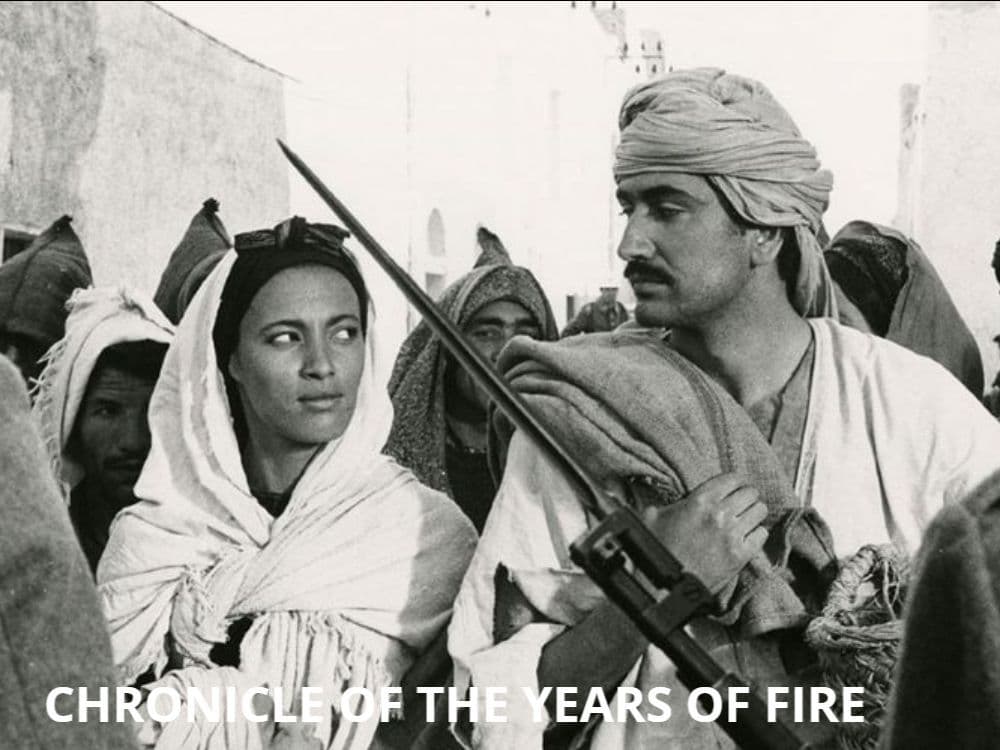
Mohammed Lakhdar-Hamina — "Chronicle of the Years of Fire" — Cannes Palme d'Or, 1975 — Algeria. The only African Palme d'Or winner in the 70-year history of the prize. Algerian production, the most expensive of its era. The Algerian War of Independence as seen through a peasant farmer's life, 1939–54. Hamina passed away 23 May 2025 — the same day Cannes Classics screened the 4K restoration for the film's 50th anniversary.
Zézé Gamboa — "The Hero" / "O Herói" — Sundance World Cinema Grand Jury Prize: Dramatic, 2005 — Angola. The only African winner of the Sundance World Cinema Grand Jury Prize since the competition was introduced in 2005, across both Dramatic and Documentary tracks. Angola–Portugal–France co-production shot entirely in Luanda. Four intersecting lives in the immediate aftermath of Angola's 27-year civil war. The film took the inaugural Dramatic prize at the 2005 edition.
Mati Diop — "Dahomey" — Berlin Golden Bear, 2024 — France/Senegal/Benin. The only Golden Bear winner to satisfy all three filters. Paris-born to Senegalese musician Wasis Diop (brother of Senegalese pioneer Djibril Diop Mambéty). Self-identifies as French-Senegalese and cinéaste afrodescendante. A 67-minute documentary-essay on the November 2021 return of 26 royal artifacts of the Kingdom of Dahomey from Paris to Cotonou. Fun fact: Lupita Nyong'o, the first African to serve as Berlinale jury president, presented the prize.
Tarik Saleh — "The Nile Hilton Incident" — Sundance World Cinema Grand Jury Prize: Dramatic, 2017 — Egypt. Stockholm-born (1972) to an Egyptian father and Swedish mother, Saleh identifies as Swedish-Egyptian and has built his directorial work around contemporary Egypt — the Cairo trilogy continued with "Boy from Heaven" (Cannes Best Screenplay, 2022) and "Eagles of the Republic" (Cannes Competition, 2025). "The Nile Hilton Incident" is a political thriller set in Cairo on the eve of the 2011 revolution. Egyptian state security shut down the original Cairo production; Saleh moved the shoot to Casablanca and Berlin.
African-born, non-African story. Abdellatif Kechiche, born in Tunis in 1960, won the Cannes Palme d'Or in 2013 for "Blue Is the Warmest Colour." The film is a French/Belgian/Spanish romance adapted from Julie Maroh's French graphic novel.
African story, non-African filmmaker. Mark Dornford-May, born in Yorkshire, England, won the Berlin Golden Bear in 2005 for "U-Carmen eKhayelitsha," a Xhosa-language adaptation of Georges Bizet's "Carmen" set in Khayelitsha, a township in Cape Town, South Africa. He began working in South Africa in 2000, became a permanent resident in 2004, and was inducted into the Sotho clan of his wife, Pauline Malefane's family, in 2007. Contemporary and later coverage has described "U-Carmen eKhayelitsha" as the first African film to win the Golden Bear, with Mati Diop's "Dahomey" in 2024 as the second.
Venice Golden Lion (since 1949). Zero African wins through the 82nd edition (September 2025). The closest: Tunisian director Kaouther Ben Hania's "The Voice of Hind Rajab" took the Silver Lion Grand Jury Prize at Venice 2025 — the runner-up — under jury president Alexander Payne. Alice Diop's "Saint Omer" (2022) also took Silver, with the Silver Lion Grand Jury Prize and the Lion of the Future for Best First Film.
Toronto Platform Award (since 2015). Several African and African diaspora filmmakers have screened in the Platform programme without winning: Nabil Ayouch's "Razzia" (2017), Maïmouna Doucouré's "Hawa" (2022), Cédric Ido's "The Gravity" (2022), Nora El Hourch's "Sisterhood / HLM Pussy" (2023), Olivier Sarbil's "Viktor" (2024), Orian Barki and Meriem Bennani's "Bouchra" (2025).
Busan Best Film Award / Busan Award (since 2025). The Busan Award was introduced at the 30th Busan International Film Festival in September 2025. BIFF describes the Competition section as a section for outstanding Asian films from the year. The inaugural Best Film winner was Zhang Lu's "Gloaming in Luomu" from China. Consequently, under the current published description, this is the least likely route for African filmmakers among the six Academy-listed festival prizes.
Four technically qualifying wins across 49 years — Mohammed Lakhdar-Hamina at Cannes in 1975, Zézé Gamboa at Sundance in 2005, Tarik Saleh at Sundance in 2017, and Mati Diop at Berlin in 2024. Three of the new rule Academy-listed prizes — Venice's Golden Lion, Toronto's Platform Award, and Busan's Best Film Award — have zero winners that meet the "Africa" criteria used here.
The new Academy route is a real option, but narrow. To be sure, a Palme d'Or or Golden Bear could already strengthen a film's case before a national selection committee; historically, it has. The difference now is that a qualifying win can create a separate International Feature Film entry path. This could matter most where a national selection committee does not submit a film. For example, Nigeria did not participate in the 2026 Oscars — the third time in five years — and Kenya's committee found no "eligible entry" per its own rules for the 98th Academy Awards.
Still, to benefit from the new rule, a film first has to be selected to compete at Berlin, Busan, Cannes, Sundance, Toronto, or Venice, and then win the qualifying prize. Subsequently, filmmakers, producers, sales agents, festivals, and funders attached to African feature films may have one more reason to pursue main competition slots at these six festivals.
International Feature Oscar submissions are due September 30.
Source: africanfilmpress.com