
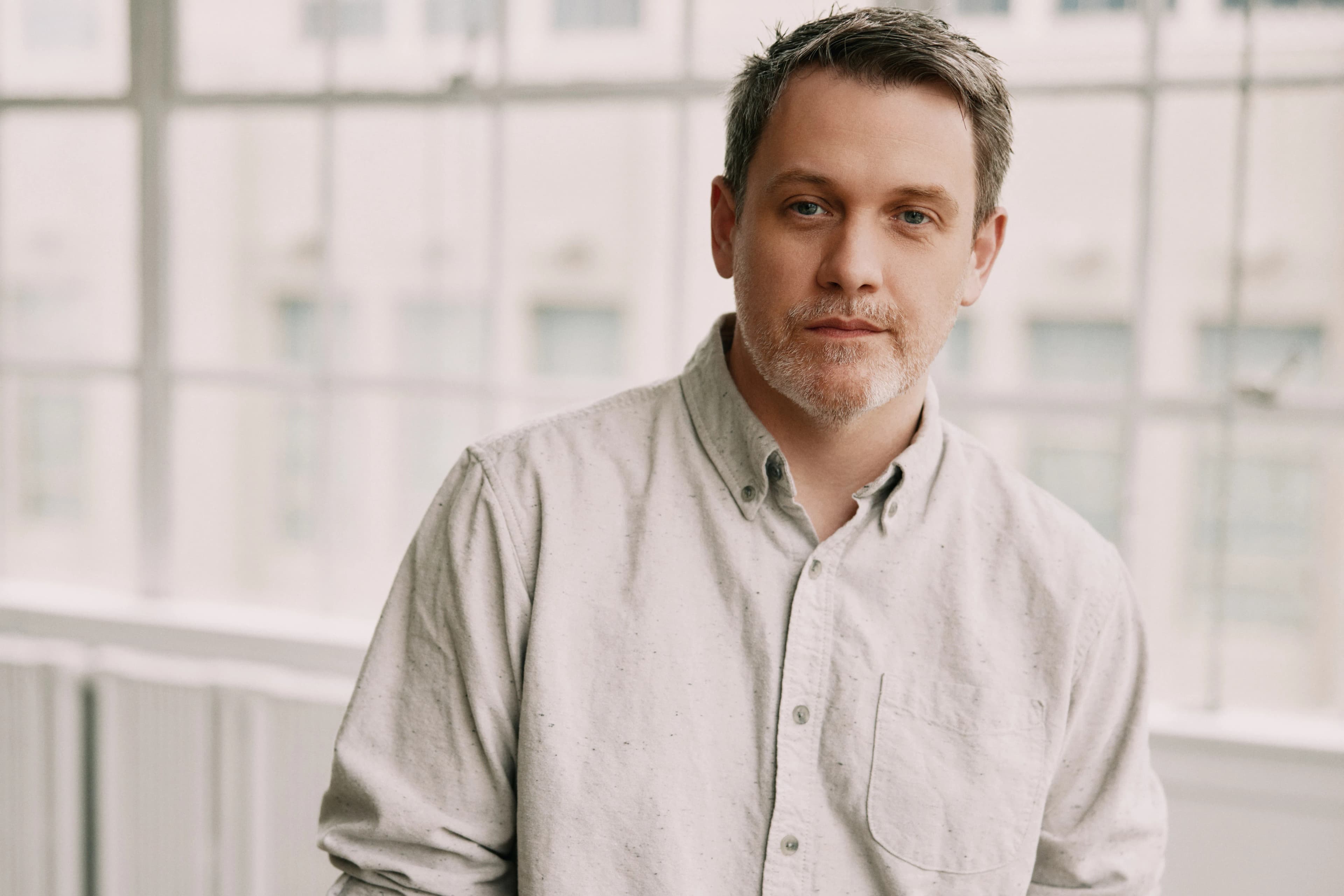
Last year, Michael Arden turned a musical about two robots into a Tony Award winner for best musical. This year, he’s taking on vampires.
This interview has been edited and condensed for clarity.
I received an inquiry via my agents from our producers about it. I hadn’t ever seen the movie, so I immediately watched it with my husband, and thought, “Well, this is silly and fun and not what I expected at all.”
I was a big vampire fan, but mostly of the Anne Rice persuasion. So to see this thing about sexy biker vampires that is kind of niche and culty, I thought, that’s usually good fodder for musicals.
Ultimately, the heart of it was a story about a family trying to start over and stay together amidst the winds of change and growing up. What could be fun about it is that it didn’t have to just be one genre. It could be comedy, romance, vampire thriller, horror. And that felt like something that could sing in a way like it was just off center enough.
It all has to be based in emotional honesty. You can go see an incredible comedy, and the reason it works is because the characters believe what they’re chasing after in a major way.
With this, it’s literally life and death – or eternal life. The stakes, no pun intended, are already incredibly high. So it’s about never letting it become melodrama or slapstick. It has to ride this line where both the drama and the comedy are based in honesty.
It’s exciting to be in a theater and see 10-year-old kids loving it just as much as people in their 60s and 70s. Hopefully it’s inviting everybody to dip into a genre that might not be their favorite, but by the end they realize all these things can coexist.
I think it’s about honoring the movie, highlighting its best moments and letting people feel taken care of – that the thing they’ve loved as a part of their lives is cherished by us.
Just their honest reaction. You can tell when people fidget. You can tell when people aren’t applauding like you hoped they would.
It’s the creation of empathy. You go to the theater to see stories outside your own lived experience. Hopefully not too many people have been in the situation Michael, and his family find themselves in. But by the end you’re like, ‘Oh, that’s me.’ That’s empathy in its simplest form.
The more disparate communities we can get into a theater, just helps build a stronger community overall. These might be robots, these might be vampires, these people might be living on an island ransacked by a storm, but I am like them, and therefore they are like me.
I want people leaving saying, ‘I loved that story. I loved those people. I loved those songs.’ I don’t want them leaving thinking, ‘Oh my God, the special effects were amazing.’ Sure, that’s great, but the effects have to serve the story.
It’s always a balancing act. You have to really make sure: am I showing something off because we can, or is it actually an exciting way to tell the story that’s going to make the audience believe in vampires?
New York is one of the most expensive cities in the world, it involves a ton of people and unions, and since COVID it’s gotten exponentially more expensive. So making sure you’re still delivering quality when that’s a factor has been the hardest thing.
And now, everyone is able to be a critic because they have a phone in their hand. The process is different than it once was. It’s not like you get to develop something, test it, and wait until the critics arrive. People are putting things on the internet at the first preview.
Source: variety.com