
Amir Naderi, Bahram Beyzaie, Film Forum, Manhattan by Numbers, Metrograph, The Runner
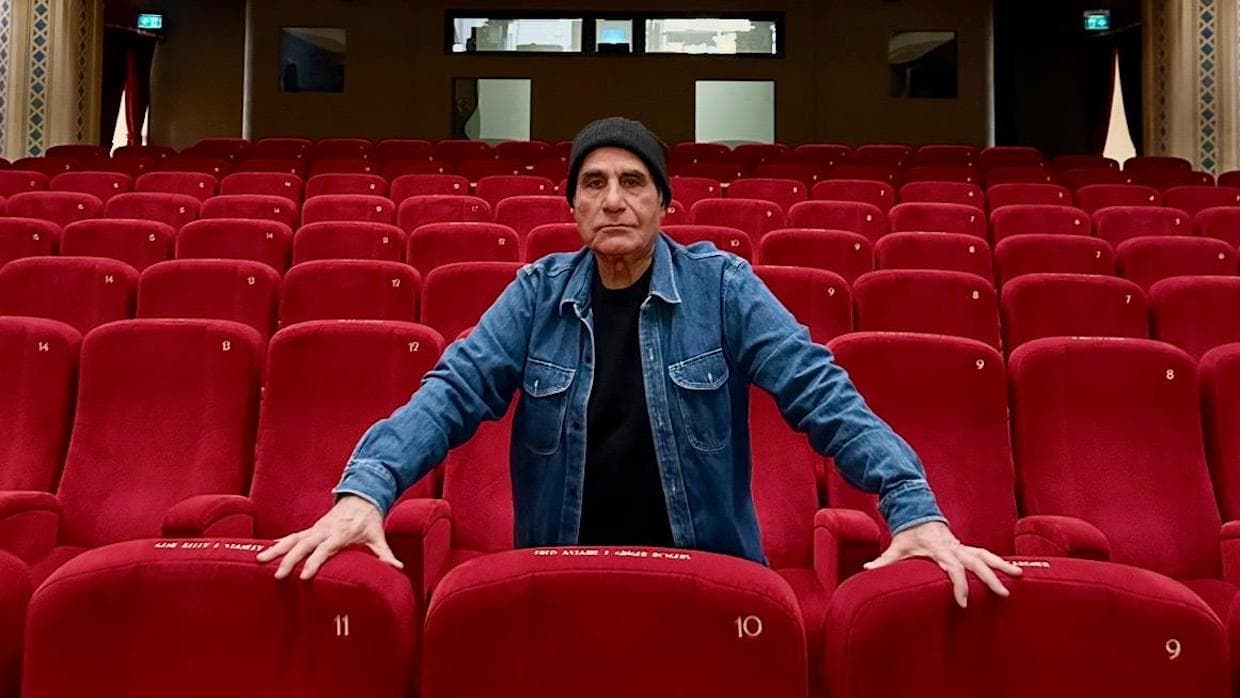
Amir Naderi is on the move. I connected with the Iranian filmmaker over WhatsApp on a chilly February morning, or at least morning where I am. He’s calling me from Rome, which is the second stop on his tour through Europe teaching classes on filmmaking. In every country he visits, he tells me, he shapes the curriculum around that nation’s cinema history. It’s a pedagogical approach that aptly reflects the cosmopolitanism of a filmmaker who has shot films in the United States, Japan, and Italy, and who hopes to potentially make a film in Australia. “If I can do it,” he tells me. “If not, I keep going anyway.”
That dogged determination has defined Amir Naderi’s life, beginning with his films made in Iran, a small sample of which screened at Metrograph earlier this month. His father died before he ever knew him, and Naderi’s mother passed away when he was five years old. The odd jobs he took as a child in Abadan to make ends meet included selling ice blocks, unforgettably dramatized in his 1984 classic The Runner (Devandeh), and selling soda at a local cinema. It was there that Naderi discovered his vocation. “I knew it from the beginning [that] my dream is in there, in that screen.”
Naderi’s insatiable hunger for film led him to discover the work of auteurs he still speaks of with hushed reverence: Ford, Huston, Mizoguchi, Ophüls, and Ozu. Yet he isn’t content to simply exalt the canon as an educator. He guides his students toward filmmakers and screenwriters like Ben Hecht and Billy Wilder, whose grasp of story structure may prove instructive for them as they find their own creative voices. It’s an approach that favors discipline over a slipshod collation of footage that, Naderi argues, fuels the creative homogeneity of so much contemporary world cinema. From this approach, Naderi reasons, “I can make, I think, at least 50 directors out of the world.”
Naderi’s own output during the Iranian New Wave has assured his legend in his nation’s cinematic history, beginning with his 1974 diptych of Harmonica (Sazdahani) and Waiting (Entezar). After cutting his teeth on three features produced under the aegis of the studio system, Naderi had a moment of contemplation when making Tangsir, his large-scale adaptation of Sadeq Chubak’s 1963 novel. “One night, I was young, drunk, and in the rain, I said, ‘Amir, what do you want to do? You want to go this way? If you want to go this way, you’re not getting anything. What do you want to do?’ I said, ‘I want to do it my way.’”
While Naderi’s preoccupation with the dignity of human perseverance is apparent in Tangsir, the formalist expressionism that characterized his subsequent features made him a darling of the international festival circuit, with The Runner a major work of Iran’s post-revolution cinema. That film was edited by Bahram Beyzaie, a legend in his own right who passed away in December and was the subject of a retrospective at Metrograph, along with Naderi. Speaking with him about their relationship, Naderi speaks primarily of a
Source: filmmakermagazine.com