
The first film I ever saw, my father projected on our living room wall in Kampala, Uganda.
The film was called Njabala. A story about a girl-child whose mother dies. The father remarries. The stepmother has no patience for this useless girl who cannot manage domestic duties. Njabala is backed into a corner. The ghost of Njabala’s mother arrives. She is gentle, whispery and loving. She teaches her daughter how to carry herself, how to move through the world, and she does this through a song, sung in Luganda, called Njabala.
Now imagine the fear in a child who sees for the first time what looks like ghosts floating on her living room wall, and it is then revealed that one of the characters in the story is actually dead. My father is a forward-thinking man, and I’m sure he never meant for Njabala to become my personal anthem, or imagined the impact the song would have on me from then until now. At the time my mother wasn’t around. In some strange way the ghost on the wall became her, gentle, revered, someone to look up to. But she was a ghost, not tangible or predictable. She could appear and disappear and I had no say in either. Perhaps that is why the song is the thing that stayed. The song was the only part of her to hold onto.
He was, and remains, a brilliant producer. He won a scholarship to study film in Scotland, and on his return to Uganda he started the documentary film department at Uganda Television. At the time the only films available were colonial post-office films. He lived, worked and travelled across East Africa, and what he witnessed, he wanted to bring back to Ugandan television. So he and his crew took their Bolex cameras across that part of the continent, to produce cultural programs for UTV. In his generation, media was sneered at as a profession. He understood its power, and it turned out, so did the first president of Uganda, Milton Obote. During Obote’s first presidency, an incident occurred. In 1966, after accusing Kabaka Mutesa II of treason, Obote ordered an attack on the Lubiri Palace on Mengo Hill. Forces shelled the palace with tanks and heavy artillery. The palace was set alight. The Kabaka escaped into exile. And the films in UTV’s documentary department that had captured the Kabaka and his culture, they were ordered to be set alight.
My father saved what he could and then had to run into exile. Exile. Whether it is for a king or a subject, if you had films to watch about your culture and home while in exile, perhaps it would not feel so far away, as you’d have something to hold onto. Many years later, when my father came out of exile, he took me back to UTV. The Steenbeck equipment was still there, marvelous film editing machines sitting under decades of dust. To pay homage to the pioneers of African cinema, for my graduation film we headed off to a remote village in the south of Uganda. Naturally my father was the producer. We used a Bolex camera and shot on 16mm. The film was called Kintu, in Uganda, Kintu is the first man. In the film, the majestic Mutumba, a talking tree, teaches Kintu how to make bark-cloth. The camera operator, also completing her degree on Kintu, was an Irish cinematographer called Joanne. She had bright ginger hair and the most translucent white skin, you could sometimes see the colour of her veins. The children in the village would be running about their daily business, see Joanne, and freeze in shock and horror. One screamed from somewhere deep within her soul and just ran, probably entirely in the wrong direction.
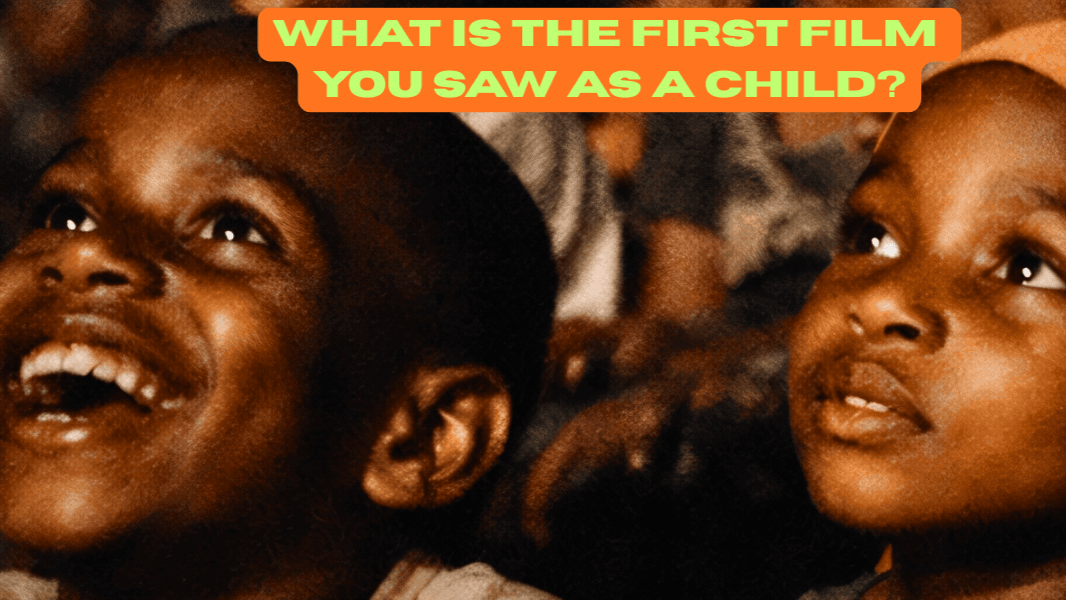
As a child I used to hear the word Zanzibar spoken with such magic and mystery. So eventually I made my way to the island. While there I worked at the Zanzibar International Film Festival under the directorship of Professor Martin Mhando. On one particular evening we screened Kirikou and the Sorceress, translated into Kiswahili, in the open-air amphitheatre of the Old Fort, Ngome Kongwe. Hundreds of children all looking up, caught in the magic, the light from the screen moving gently across their faces. That act, the introduction of cinema to a child, was the same gift my father had given me on our living room wall. At the Zanzibar festival we were doing what he had done, we were planting something we could not predict. That is the power of cinema. It goes somewhere, and you are responsible for that story that you planted. My father does not remember projecting Njabala on our living room wall. He does not even remember where the film came from. But that one action helped shape who I am today.
I think about Obote. The abomination of burning history, of setting culture alight. What are the stories that shaped the man who gave that order? We are making a film called African President. We asked each of the statesmen to sing for us their most memorable childhood song. H.E. Olusegun Obasanjo former president of Nigeria sings a song about blessings. The late H.E. Jerry John Rawlings former president of Ghana sings, but first talks about a song his grandmother used to sing as tears ran down her face.
Source: linkedin.com