
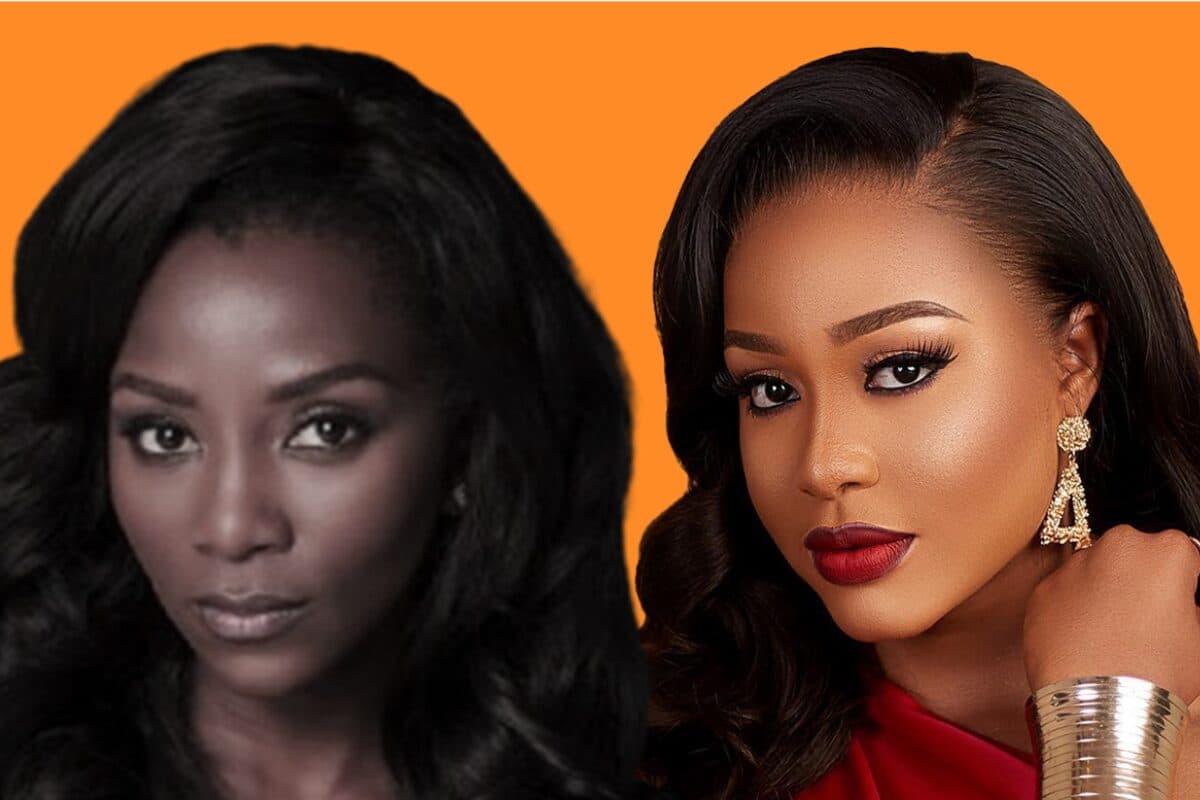
There was always something quite enjoyable about seeing Genevieve Nnaji hold a Lux bar that wouldn’t last a week in an advert. Same with Osuofia (Nkem Owoh) advertising car batteries on TV. Because you knew his movie archetype, a stingy man, you knew that those batteries would probably last longer than car itself. That, at least, was part of the appeal.
Fame was maybe a bigger part of the appeal. But product ads in the early 2000s and late 90s did factor in Nollywood archetypes—and that sold us even more on the product they were advertising. It must have been easy deliverables for whoever was in charge of marketing.
These days, fewer ads on TV or online utilise Nollywood stars. Why is that?
I believe the answer is that a combination of factors have led to advertisers relying less and less on the star-power of the Nollywood actor.
Poverty Or the Eradication of the Middle Class
In the early 2000s, Nollywood stars represented a middle-class to aspire to and this seemed attainable. Your most popular actors lived in Surulere, drove 1990s’ era vehicles and you might have gone to boarding school with their kids. Heck, I slept in the late great Justus Esiri’s house a few nights myself as a nobody from Oshodi.
This means that there was a likelihood that a product being advertised by a Nollywood star was something they were also likely to use. Car batteries, malaria medication, soap bars. As the industry grew and expectations of stars either by the public or by an industry high on its own supply of hubris, Nollywood stars lost the air of relatability that made them perfect avatars for products the everyday person could be swayed to buy.
An actor might agree to be the face of a low-budget android phone brand—but it would be almost impossible to see that actor attend an event and take selfies with that brand. Instead, a need to declare their high status would likely have them take selfies with the latest iPhone pro max model. The class-gap between the viewer and the Nollywood star today is too wide for many products to bridge.
Authenticity Deficit
This is related to the above. And Nollywood stars are not entirely to blame, outside of sports betting apps, what mass consumable can they advertise that their audience would believe they actually consume on a regular basis? Also, in an age of increased media awareness, the utility of a star when it comes to pushing a non-luxury product is diminished compared to (seeming) real-life testimonials of the average Joe and Joanna. This isn’t just a Nollywood issue. No, I do not believe that aside from D’banj and his Koko garri, a celebrity ever used a product tied to their name (cough, cough, Infinix’s Davido branded phone).
Credibility Deficit
The ease with which Nollywood stars have been co-opted into advertisements for shady, suspicious and downright fraudulent products and services have robbed them of credibility. It hardly makes sense for fast-scaling operations to employ them unless those businesses are actually shady. Even as only a small number of Nollywood acts might have been involved in such practices, there is that thing they say about a few bad apples.
Who is A Nollywood Star Anyway?
As Nigerian cinema is caught in the doldrums post-pandemic, cable faces a global reset, and YouTube becomes the home to Nollywood content at scale, who is a Nollywood star? Is it Deyemi Okanlawon or Maurice Sam? Bam Bam, Uche Montana or Adesua Etomi?
Is it who was last in a cinema project or someone who’s led a Netflix-licensed or commissioned project? Is it the person in a YouTube movie with 22 million views and 100x more impressions across social media?
The inability to define the new standard for what makes a Nollywood star in the eyes of the public, and not the establishment and their fiefdoms mean that making a play for a Nollywood star is hardly worth the trouble for a brand seeking wide notice. Advertisers would rather avoid the headache of trying to figure a consensus on what constitutes a Nollywood star of palpable influence.
The Inflection Point
Wait. What do you mean Nollywood stars aren’t used anymore? That’s not true! There’s a custard advert with Toyin Abraham. Bimbo Ademoye has a thing with an alcohol brand (Flying Fish). Fireboy had a deal with a phone manufacturer (Tecno). Carter Efe is doing something with a phone brand (Vivo). The dancing starlet from Big Brother represented a fintech (Kuda Bank) for a while and…
Exactly, the further you go, the fewer the movie stars, the more the “influencers”.
Movie and TV stars used to be the sole window through which the audience experienced storytelling, found characters to love or hate or laugh at and impose certain types of identities on. But now, thanks to the internet, influencers have filled that role and may be better at it. They’re spontaneous, unguarded, and are a whole archetype by themselves. No movies needed, just tons of reels and shorts in which their archetype is reinforced for the audience to instantly associate with going forward.
Ademoye might have cut her teeth in the beginning with movies and TV series but she came into her current prominence by adopting her character from an Uduak Isong film and doubling down on it across skits on YouTube, Instagram, Facebook, and everywhere else.Movie stars being product banners was not preordained. It was just a consequence of their popularity and visibility—which product owners could capitalise on. That remains the case today. As a result, today’s movie star needs to pull double-duty as an active content engagement machine to have any utility. Nollywood stars who understand this will be fine. Others probably won’t be.
Source: filmefiko.com